
Measurement planning: where to begin
Read the guides below in the order that fits your question. Each article includes a relevant primary reference, an original worked approach, and links to the next useful concept. Keep sample illustrations separate from actual site observations as you apply the ideas.
Define the decision
State what the evidence should help the team change or investigate.
Describe one record
Make the trigger, fields, unit, and allowed state explicit.
Close the loop
Keep release notes, review results, and retire unused collection.

Browser analytics: a practical guide to better website decisions
Turn browser reports into a focused testing plan, with clear definitions, honest denominators, and a useful first-week workflow.
Privacy-first analytics: measure less, learn what matters
Build a smaller measurement plan with explicit purposes, thoughtful collection boundaries, and practical checks for every new event.
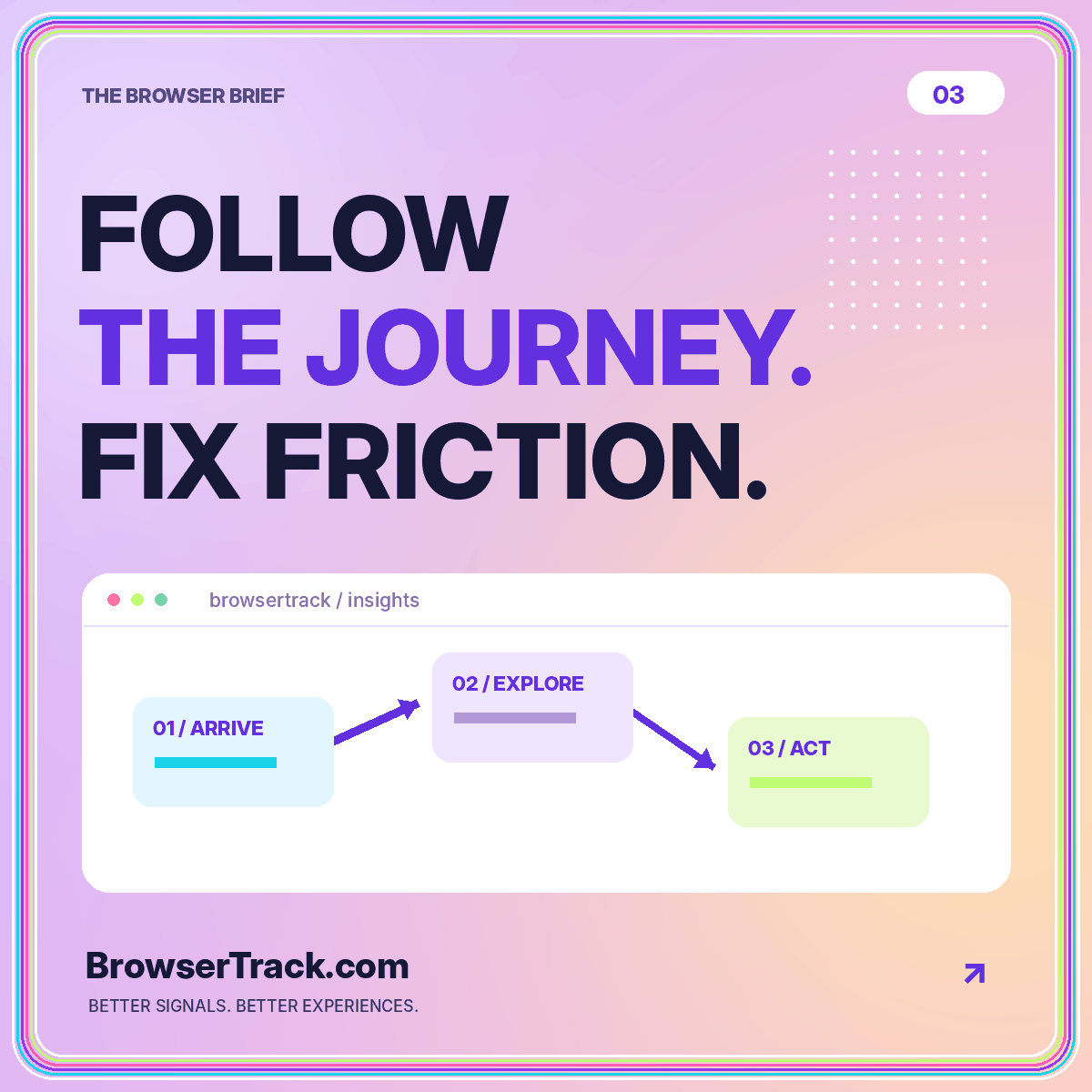
User journey mapping: find the friction between arrival and action
Map a meaningful visitor task, distinguish paths from funnels, and turn apparent drop-offs into testable usability questions.
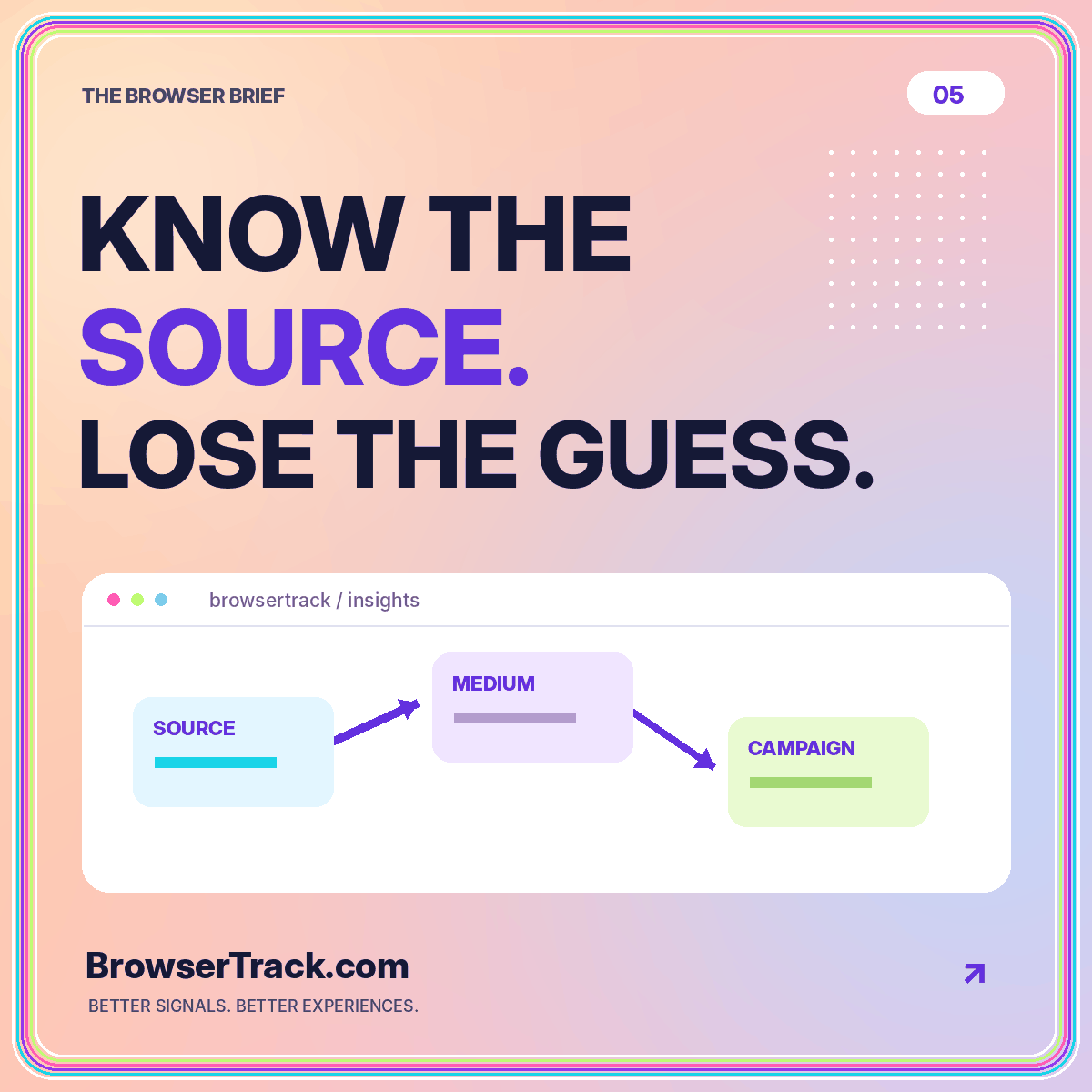
Traffic sources and UTM tracking: build a campaign naming system that lasts
Create readable campaign labels, test complete link journeys, and avoid turning acquisition reports into a collection of inconsistent names.
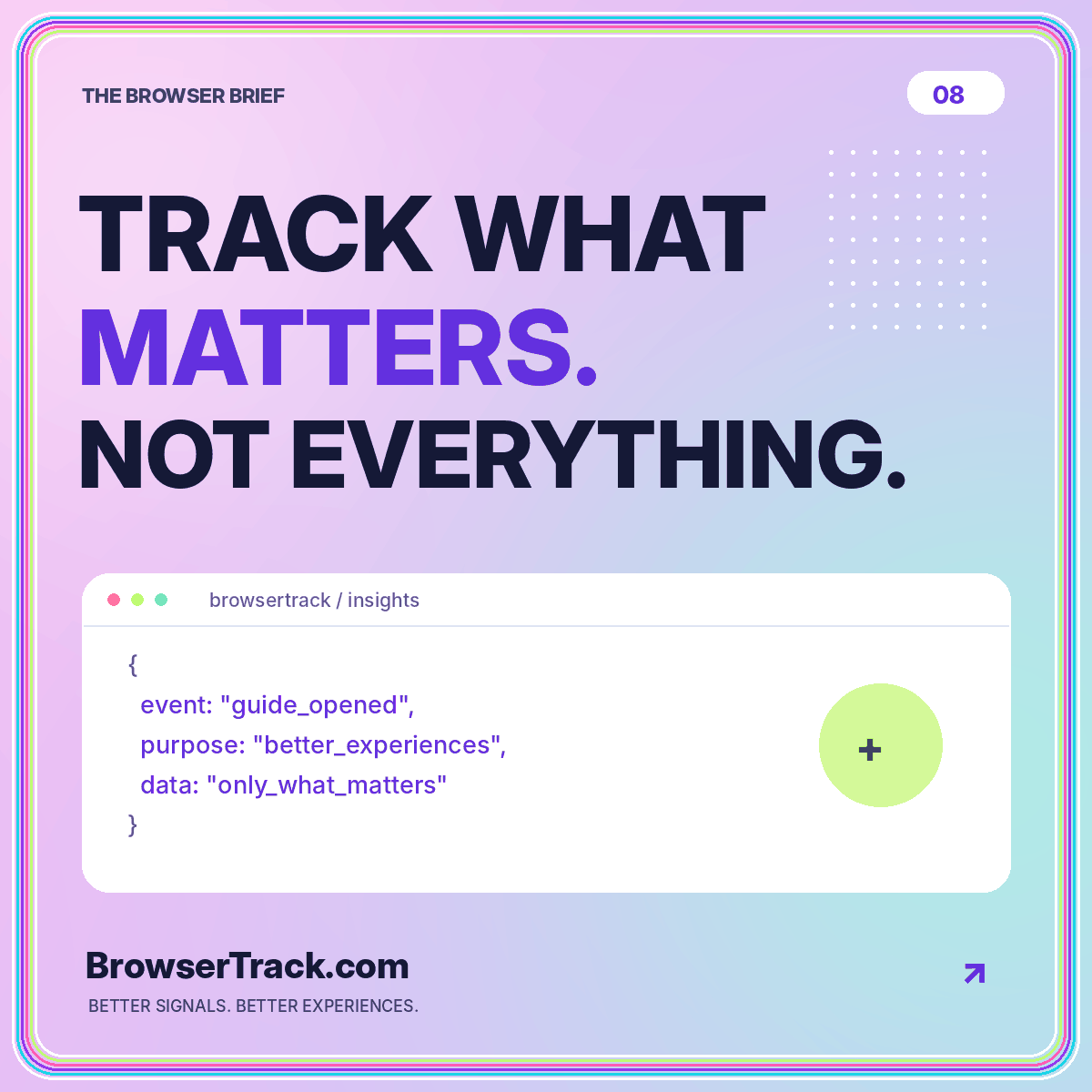
How to write an event tracking plan your whole team can maintain
Give events a purpose, stable names, reviewed properties, precise triggers, and acceptance tests before adding collection code.
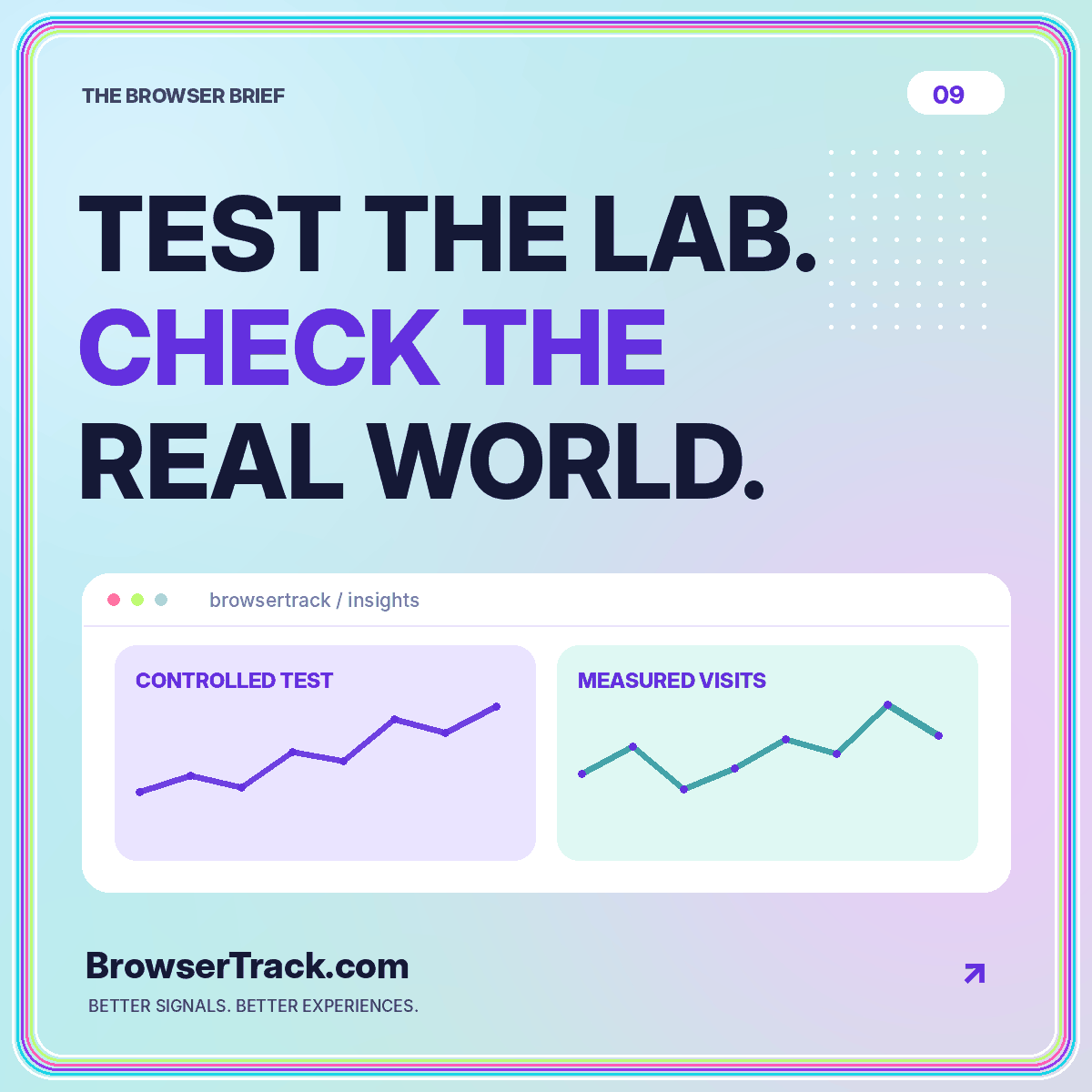
Lab testing vs. real-user monitoring: why both belong in your performance workflow
Use controlled tests to investigate causes and field evidence to understand measured experience, without treating their numbers as interchangeable.
Website analytics dashboard metrics: choose the numbers that support a decision
Build a readable dashboard with defined counting units, visible denominators, useful comparisons, and an owner for every metric.